
Chemical submission: when the fiction of Stranger Things reveals a very real risk
Introduction — when Hawkins opens the door to danger
In episode 3 of the latest season of Stranger Things, in the fictional town of Hawkins (Indiana, USA), a group of children — led by Mike Wheeler — devise a dark plan: to use anxiolytics found in a mother’s medicine cabinet, drug a pie meant for an entire family, to neutralize the parents and “protect” a future victim from the evil embodied by Vecna.
This chilling fictional scenario highlights a reality too often trivialized: chemical submission. When fiction fantasizes about drugs as a tool of power, reality makes it a tool of violence.
Chemical submission: what are we talking about?
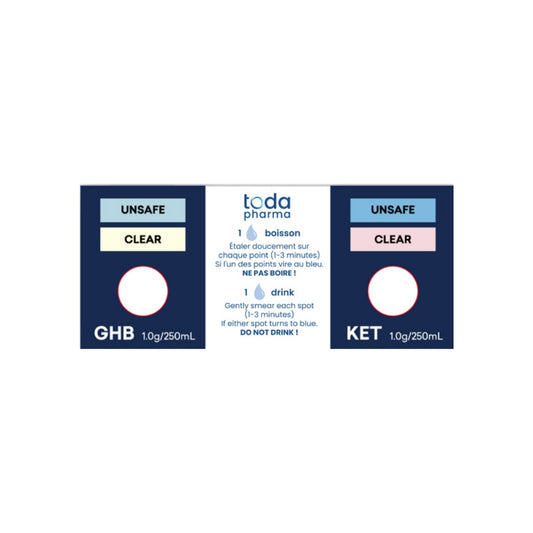
Chemical submission refers to the administration, without knowledge or consent, of a psychoactive substance (alcohol, GHB, benzodiazepines, hypnotics, synthetic drugs...) to a person with the aim of weakening them, making them vulnerable, preventing them from resisting or remembering.
Among the frequently cited substances are benzodiazepines / anxiolytics / sedatives — medications often found in medicine cabinets. Their misuse, combined with trust or assumed consent, poses a serious risk.
Anxiolytics – everyday commonality, danger of misuse
In many households, these medications — prescribed for anxiety, insomnia, or other disorders — are stored as harmless remedies. But consumption outside of protocol or prescription, or intentional misuse, can lead to dramatic effects:
- drowsiness, confusion, loss of reflexes, loss of alertness
- temporary or total amnesia
- overdose, coma, dangerous interaction with alcohol or other substances
These medications are therefore much more dangerous than commonly believed — and when used to neutralize a victim, toxicity is only the visible part of the danger.
When fiction normalizes violence, prevention must raise awareness
The Stranger Things storyline illustrates how drugs can be normalized, reduced to a “tool” of manipulation, almost ordinary. While fiction is not subject to real-world constraints (analysis, detection, justice), real life demands vigilance.
It is crucial to remember that behind the idea of a “calming agent in a pie” lies very real violence — drug-facilitated assault, violation of consent, psychological or physical alteration, lasting trauma.
Why prevention is essential — taking responsibility, protecting, acting
Anyone can be affected — a party, a shared drink, a moment of weakness, blind trust. Prevention means: raising awareness, informing, alerting, establishing reflexes.
For a household, an event, a company, or an association, this also means: never trivialize, guarantee consent, monitor drinks, support the most vulnerable.
Conclusion — collective vigilance against invisible danger
Stranger Things and Netflix remind us that evil can take insidious forms — anxiolytics, a tampered pastry, blind trust. AMA Prevention reminds us that chemical submission is not fiction.
Protecting, raising awareness, informing — this is our collective mission. Every drink, every moment, every consent matters.