Back-to-School 2025: Prevention, Welcome Parties, and Anti-GHB Bracelets
The start of the academic year, between conviviality and responsibility
Each year, the start of the academic year marks the kickoff of a student life paced by integration days and festive evenings organized by BDEs and associations. These events play an essential role: creating connections, welcoming newcomers, and strengthening the sense of belonging to the student community.
In Strasbourg, where AMA Prévention develops its products in partnership with the laboratory Toda Pharma, student life is particularly dynamic: the city is one of the largest university capitals in France, with thousands of students from all over Europe. This context makes it a privileged ground for innovation and experimentation for prevention measures adapted to the realities of student life.
But behind the conviviality also lies a collective responsibility: to ensure that the party remains a moment of sharing and safety for everyone. Already present at many festivals and festive events, AMA Prévention has observed that vigilance and prevention have become strong expectations of youth and organizers.
Prevention, awareness, and support are therefore essential challenges, and many actors in the student world – such as mutual insurance companies, federations, or associations – are already working in this direction.
It is in this context that AMA Prévention is committed to offering concrete and accessible solutions to fight against a risk still too present in festive environments: chemical submission.
"81% of victims are women, with an average age of 27."
(Source: National Study 2000–2019, ANSM / PubMed)
Stakeholders already committed to student prevention
French student life relies on a strong network of associations and institutions that have been working for several years on prevention and well-being for young people.
- MGEL (Mutuelle Générale des Étudiants de l’Est) has long stood out for its health and prevention programs. Present on many campuses, it regularly runs campaigns on addictions, mental health, and safety in student environments.
- Student federations such as FAGE (Federation of General Student Associations), UNEF, and PDE bring together thousands of students across France. They organize major events – welcome parties, congresses, themed evenings – and increasingly include awareness-raising measures in their communication.
- Finally, Student Offices (BDE) and local associations play a key role: they are the primary organizers of welcome parties and back-to-school events. They are therefore on the front line to implement concrete prevention solutions.
These stakeholders have already demonstrated their organizational capacity and commitment to student health. But faced with new risks, notably chemical submission, their efforts can be strengthened with suitable and accessible tools.
An additional challenge: chemical submission
While student prevention campaigns often focus on combating heavy drinking or drug use, another phenomenon increasingly worries organizers: chemical submission.
"In 2022, 1,229 probable cases of chemical submission or vulnerability were recorded by CRAFS."
(Source: Josso Report, Ministry of Gender Equality, 2025)
GHB, ketamine, and certain benzodiazepines can be secretly added to a person's drink. These substances, which are colorless and odorless, act quickly and plunge the victim into a state of extreme vulnerability. Reports related to these practices have increased significantly in recent years, especially at festivals, bars, and private parties.
Student parties and orientation days are not spared from this risk. The crowd density, alcohol consumption, and difficulty monitoring every glass create a favorable environment for malicious acts.
Given this reality, it becomes essential to broaden the scope of prevention: beyond general awareness campaigns, it is necessary to offer female and male students simple and effective tools to protect themselves concretely.
AMA Prévention, a committed partner
In response to these challenges, AMA Prévention positions itself as a trusted ally for the student world. A specialist in screening and protection solutions, the company develops and distributes tools adapted to the realities of parties and festive events.
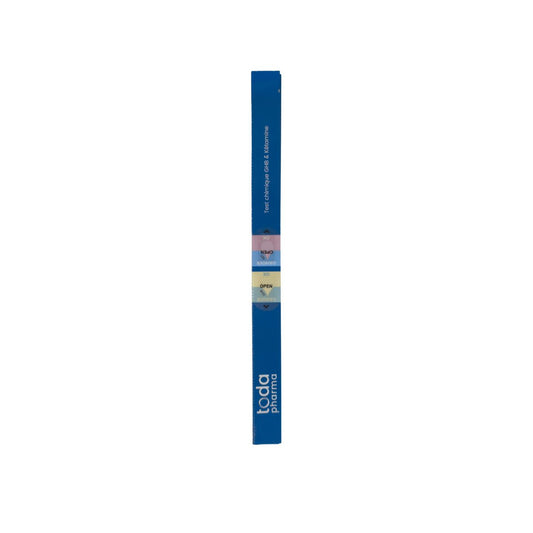
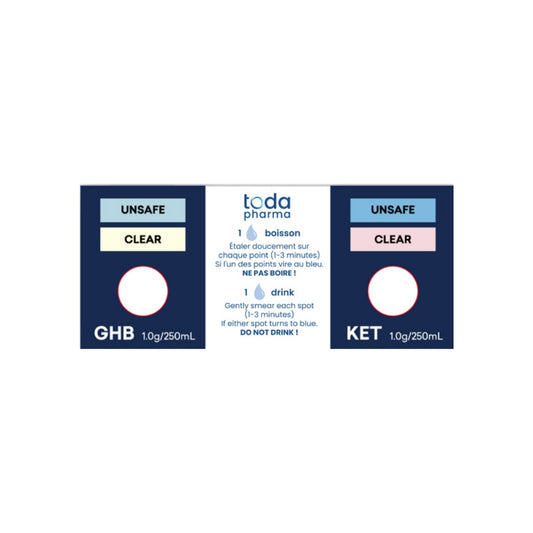
- The anti-GHB bracelets, designed in collaboration with the Toda Pharma laboratory, allow quick testing of a drink and detection of GHB or ketamine. Discreet and easy to use, they naturally fit into a festive context.
- The glass condoms provide a simple, reusable physical barrier, preventing any unwanted substance from being added to a glass.
- The DrinkSafe® 3-panel cards represent an innovative evolution: they allow quick testing for the presence of GHB and ketamine in a drink, while offering 2 customizable panels with stickers provided by clients. This solution combines prevention and visibility for BDEs, mutual insurance groups, or student federations.
- The Drugdiag® multi-drug urine tests (6, 10, 11, 13T, CUP) complete the range. They instantly detect several psychoactive substances, including some frequently used in cases of chemical submission (benzodiazepines, opiates, methadone, amphetamines…). CE certified and made by a French manufacturer, they are already used by the military, companies, and healthcare professionals.
- Finally, AMA Prévention offers the rental of Ethylobornes: self-alcohol testing stations available at the entrance or exit of events. They allow participants to check their blood alcohol level before driving, significantly reducing the risk of accidents. This approach is part of a global prevention logic, complementary to chemical submission prevention devices.
These solutions, already deployed at festivals and with associative partners, are now accessible to the student world. They can be integrated into back-to-school packs, distributed at parties, set up at prevention stands, or directly at the heart of events.
For student associations, AMA Prévention also offers the possibility to customize anti-GHB bracelets from 500 units, allowing prevention and visual identity to be combined during events.
By combining its expertise with that of student actors, AMA Prévention aims to help make the start of the school year a festive but also safe and responsible moment.
AMA Prévention, a committed partner
In response to these challenges, AMA Prévention positions itself as a trusted ally for the student world. Specialist in screening and protection solutions, the company develops and distributes tools adapted to the realities of parties and festive events.
- The Toda Pharma anti-GHB bracelets, designed in collaboration with the laboratory, allow quick testing of a drink to detect the presence of GHB or ketamine. Discreet and easy to use, they naturally fit into a festive context.
- The glass condoms, developed in partnership with the French company Capote2verre, provide a simple and reusable physical barrier, preventing any unwanted substance from being added to a glass.
- The DrinkSafe® 3-panel cards represent an innovative evolution: they allow quick testing for the presence of GHB and ketamine in a drink, while offering 2 customizable panels thanks to stickers provided by clients. This solution combines prevention and visibility for BDEs, mutuals, or student federations.
- The range of Drugdiag® multi-drug urine tests (6, 10, 11, 13T, CUP) completes the offer. These devices instantly detect several psychoactive substances, including some frequently used in cases of chemical submission (benzodiazepines, opiates, methadone, amphetamines…). CE certified and French-made, they are already used by the military, companies, and healthcare professionals.
- AMA Prévention also offers Ethylobornes rental: self-alcohol testing stations available at the entrance or exit of events. They allow participants to check their blood alcohol level before driving, significantly reducing the risk of accidents.
- Finally, AMA Prévention does not just provide tools: we train and raise awareness among student associations, mutual insurance companies, and other organizations about the risks related to drug and alcohol consumption, as well as the specific dangers of chemical submission. We also support organizers in using our devices to ensure their maximum effectiveness on the ground.
These solutions, already deployed at festivals and with partner associations, are now accessible to the student community. They can be included in welcome packs, distributed at parties, set up at prevention booths, or directly at the heart of events.
For student associations, AMA Prévention also offers the possibility to customize Toda Pharma anti-GHB bracelets starting from 500 units, allowing prevention to be combined with visual identity during events.
By combining its expertise with that of student organizations, AMA Prévention aims to help make the start of the academic year a festive but also safe and responsible moment.
Making prevention a collective strength
Student mutual insurance companies, national federations, and student unions already play an essential role in university life. Their organizational capacity and close connection with students make them key partners for strengthening prevention.
AMA Prévention wants to be part of this dynamic, not just as a supplier, but as a strategic and educational ally. By providing certified, suitable, and easy-to-deploy tools – Toda Pharma anti-GHB bracelets, Capote2verre glass condoms, customizable 3-panel DrinkSafe® cards, Drugdiag® multi-drug tests, and Ethylobornes – we offer student stakeholders concrete solutions to secure their events.
Our mission goes beyond providing devices. We also support organizers in:
- Training and awareness about the risks related to drugs, alcohol, and chemical submission.
- The practical use of our tools in the field to ensure their maximum effectiveness.
Our goal is clear: to enable every organizer to demonstrate their commitment to student safety and well-being, while preserving the festive spirit that enriches university life.
We therefore invite MGEL, FAGE, student federations, and BDE to initiate, starting this academic year, pilot collaborations with AMA Prévention. Together, we can build a new standard for student events: a celebration that combines friendliness, inclusion, and safety.
Conclusion: a new academic year marked by responsibility
The 2025 university start promises to be full of events, meetings, and festive moments. These times are precious for student life, but they require collective vigilance against risks related to alcohol, drugs, and chemical submission.
By partnering with student mutuals, federations, and associations, AMA Prévention aims to contribute to a new dynamic: that of a friendly, inclusive, and safe celebration.
Thanks to concrete solutions – Toda Pharma anti-GHB bracelets, Capote2verre glass condoms, customizable 3-panel DrinkSafe® cards, multi-drug urine tests Drugdiag® and Ethylobornes – as well as support in training and awareness, we affirm our commitment to becoming a reference partner for prevention in student environments.
Making prevention a collective strength means ensuring every student the freedom to fully enjoy their nights out, in an environment where safety is not optional but a given.
⚠️ Prevention and Safety: Beware of fake anti-GHB tests
The market is flooded with simple paper "anti-GHB" gadgets made in Asia, without scientific validation or proven effectiveness. The Test Ton Verre® bracelets and cards from AMA Prévention are genuine devices developed in laboratories, made from durable materials and designed by a French Manufacturer. Don’t entrust your safety to a counterfeit: demand certified and reliable protection against chemical submission.
Which substances can be detected in a drink?
Chemical submission is not limited to GHB. Reported cases may involve sedatives, anxiolytics, antihistamines, opioids, or drug mixtures. This is precisely why a modern prevention approach must address drugs in drinks, not just anti-GHB.
Type 1 benzodiazepines
The “-pam” family: diazepam/Valium, oxazepam/Séresta, lormetazepam, bromazepam/Lexomil, clonazepam/Rivotril, lorazepam, flunitrazepam, nordazepam, loprazolam/Havlane, chlorazepate/Tranxène, prazepam/Lysanxia, nitrazepam, temazepam, chlordiazepoxide. Noted exception: clobazam.
Type 2 benzodiazepines
The “-lam” family: alprazolam/Xanax, midazolam, triazolam, estazolam and related molecules.
Synthetic benzodiazepines
Bromazolam, etizolam, bentazepam, bromonordiazepam/desalkylgidazepam, flubrotizolam, fluclotizolam, gidazepam, methylclonazepam, norflurazepam/desalkylflurazepam, thionordazepam/demethylsulazepam, tofisopam/Emandaxin.
Other relevant families
Antihistamines and phenothiazines: pheniramine/Fervex, cyamemazine, alimemazine/Théralène, levomepromazine/Nozinan, chlorpromazine/Largactil, promethazine. Opioids: codeine, morphine, oxycodone and related opioids, with caution regarding pure tramadol. Other substances: GHB, ecstasy/MDMA, and certain cutting drugs.
Important note: this information should be read as an aid to prevention and choosing risk reduction tools. A drink test does not replace collective vigilance, medical care, or sampling conducted in a medico-legal context. Antipsychotics such as olanzapine, clozapine, or quetiapine are mentioned as a family to be confirmed.
Prevention FAQ: drink tests, GHB, and chemical submission
Is an anti-GHB product enough to cover the risk?
No. GHB is highly publicized, but chemical submission can also involve benzodiazepines, sedative antihistamines, opioids, ecstasy/MDMA, or mixtures. A prevention strategy must therefore address drug detection in drinks more broadly.
Why combine B-SAFE with Test Ton Verre bracelets or cards?
Uses differ: cards and bracelets are simple, accessible, and suited for event distribution; B-SAFE offers a broader, premium approach for individuals, venues, or organizers who want to strengthen control over a suspicious drink.
What to do in case of discomfort or doubt?
Ensure the person’s safety, do not leave them alone, alert those around or staff, contact emergency services if necessary, and keep the glass if analysis might be useful. The test is a prevention tool, not a medical diagnosis.
Scientific validation of B-SAFE
The B-SAFE project, a drug detector pen for drinks, is validated and supported by Professor Jean-Claude Alvarez, toxicologist, professor of pharmacology-toxicology, and director of the toxicology laboratory at CHU Raymond-Poincaré/AP-HP in Garches.
A leading authority in toxicology, he is associated with the reference work conducted in France on psychoactive substances and chemical submission, in a national ecosystem also supported in public debate by voices such as Sandrine Josso and Caroline Darian.
This validation strengthens B-SAFE's technological positioning and the accuracy of its detection for drug prevention in drinks. Discover the B-SAFE product sheet.