Medusa Operation: Investigation into Drug-Facilitated Assault Networks
Investigation dossier · Updated July 27, 2026
Women drugged for years by people close to them, filmed assaults, and online communities exchanging substances and methods: Operation Medusa reveals organized crime that remained hidden behind household doors for far too long.
From Europol documents to proceedings opened in Germany and Switzerland, alongside toxicological analyses and revelations from STRG_F, this dossier traces the origins of Medusa, its ramifications and the questions that remain.
Listen to the investigation into domestic drug-facilitated abuse networks
Discover the key findings of our investigation into Operation Medusa, digital networks, violence committed within intimate circles and the documented substances.
The player is not displaying correctly? Open the audio file directly.
1. Medusa, an international investigation into drug-facilitated violence
Project MEDUSA is an international cooperation initiative launched on 1st April 2026 to combat substance-facilitated sexual assaults — drug-facilitated sexual assault, or DFSA — within intimate relationships and online communities. The project is led by Germany and the United Kingdom, with Brazil, Canada, France, Hungary, the Netherlands, Spain and the United States, with support from Europol.12
Medusa first looks behind the doors of private homes. The cases concern violence committed within a relationship of trust, sometimes over several years, by a partner, family member, friend, acquaintance or person in a position of authority. In the cases described by Europol, the victims are almost exclusively women. The image of a spiked drink in a nightclub is no longer enough to describe the phenomenon.
From 22 to 24 June 2026, 29 investigators met at the National Crime Agency headquarters in London. Cross-referencing the data identified 156 victims and suspected perpetrators, generated 274 new leads and uncovered four additional misogynistic communities. Since its launch, cases linked to the project have led to 57 arrests, the placing of 158 victims in safety and the opening of 113 investigations.1
The French National Police took part in the cross-checking carried out in London. However, the breakdown by country has not been published: at this stage, it is impossible to know how many victims, suspects or investigations directly concern France. Europol is keeping these details out of the public domain as long as releasing them could jeopardise proceedings.
“We do not yet know the true scale of this violence.”National Crime Agency, 2 July 2026 — translation by the editorial team.3
When the assault becomes organised
The UK NCA refers to organised drug-facilitated sexual assault, or ODFSA. The term describes violence made possible by alcohol or other substances, but also prepared and reinforced through exchanges between perpetrators. In these groups, the crime can take shape before, during and after the assault: advice, sourcing, organisation, inviting other participants, recording the acts, distributing the images and encouraging people to do it again.3
Since October 2025, the NCA says it has identified more than 270 people linked to a forum and its replacement spaces. More than 210 intelligence files have been passed to British or foreign services, opening at least 14 separate investigations. MEDUSA is therefore not an isolated raid, but a permanent framework for linking cases.
2. The journalistic investigation that triggered everything
It all began with two German journalists, Isabell Beer and Isabel Ströh. For STRG_F, NDR’s investigative format, they spent several years in Telegram groups and followed active accounts on publicly accessible pornography platforms.
From 2022 onward, they sent alerts to German and foreign authorities. Their investigations revealed dozens of groups, product sales, conversations about how to drug a woman without arousing her suspicions, and then images of assaults. One of the Telegram communities has more than 70,000 members. Behind the pseudonyms, the victims are often wives, partners, sisters or relatives.4
Profiles, groups and content are reported to the relevant authorities in Germany and abroad.
The international network, its groups, product sales and criminal content are made public.
A victim learns from the police that her husband allegedly drugged, assaulted and filmed her for around fifteen years.
Germany and the United Kingdom establish international cooperation supported by Europol.
Twenty-nine investigators cross-reference profiles, potential victims, images, forums and national intelligence.
Europol, the NCA and NDR detail the international scale of the phenomenon.
An indictment in Berlin, a major case in Aargau and a Swiss petition extend the debate.
The case of “Nils” and “Marlene”
The most emblematic case concerns a man from Lower Saxony nicknamed “Nils” by the journalists and his wife “Marlene.” According to NDR, he allegedly drugged and repeatedly raped her for approximately fifteen years. He allegedly filmed the acts and distributed the videos on public pornographic websites as well as in closed groups. On a single platform, the content allegedly accumulated more than 14 million views; the most viewed video allegedly approached four million views.5
At the end of 2024, the victim said she only understood what had happened to her during a search. She had neither a complete memory nor a clearly identifiable scene. In this type of case, the first account of the violence may emerge from a hard drive, a message history, or a video seized by the police, long before the victim herself is able to put it into words.
The revelations also exposed delays in the police response. More than a year after the journalists first passed on an alert, the account continued to publish. In an exchange observed by STRG_F, the man was still announcing his intention to drug his wife. Hamburg police subsequently examined how this information had been handled.6
“Their perseverance had a tangible impact on the people concerned.”Nigel Leary, NCA deputy director, on the two journalists — translated by the editorial team.4
Connections in Germany and Austria
On July 16, 2026, NDR announced that a 68-year-old man had been charged in Berlin with 22 offenses involving 14 women. Investigators believe that 58 people may have been affected. According to the prosecutor's office cited by the media outlet, the suspect allegedly combined sleeping pills and alcohol, filmed the assaults, and communicated online with the man from Lower Saxony. He remains silent about the accusations. NDR also reports that, in Austria, a 42-year-old man was sentenced to seven years in prison in a case uncovered through similar conversations.7
The proceedings in Berlin and Austria are not mechanically added to the tally published by Europol. They nevertheless illustrate the same mechanism: a digital profile found in a conversation can bring to light a new national case years after the initial offenses.
3. How criminal networks operate
The exchanges described by Europol and the NCA reveal a well-organized chain. Violence committed in private ceases to be a solitary act once it is prepared, discussed, filmed, and approved by other men remotely.
Often a partner, former partner, close acquaintance, or person placed in a relationship of authority or dependence.
Prescription medications, narcotics or mixtures sold through networks, sometimes under false pretenses.
In a drink, food or under a medical pretext, with increased risk when several depressants are combined.
The alleged perpetrators may film, livestream, solicit advice or enable other people to intervene.
The images become proof of status within the group, an object of exchange and a means of normalizing repetition.
On encrypted messaging services, forums and closed groups, members exchange experiences, substances, methods of administration and content. Women are described as objects available for use, in a discourse where male domination becomes a right. Technology does not cause this violence; it gives perpetrators a place to meet, reassure one another, learn from each other and reproduce the same practices from one country to another.2
The home as an invisible crime scene
Everyday trust limits suspicion. Symptoms may be attributed to fatigue, medication, illness or voluntary alcohol consumption.
The evidence may be digital
Victims may remember nothing. Files, metadata, messages, IP addresses and image matches then become decisive.
Cumulative violence
A single perpetrator may act for years. The project therefore seeks patterns, digital signatures and connections, not just isolated incidents.
Médusa must now connect thousands of traces: digital signatures of images, IP addresses, accounts that reappeared under another name, exchanges on the dark web and visual matches between files. Investigators are seeking to identify the victims and perpetrators while preserving the evidence needed for prosecutions and limiting the further circulation of the images.
4. Substances directly documented in connection with Médusa
The names of the molecules remain one of Médusa’s major unknowns. Europol mentions prescription drugs, narcotics, sedatives and alcohol, without publishing an inventory of the products seized in each investigation. However, a sample purchased by STRG_F through the network at the origin of the investigation offers an initial glimpse.
The cocktail found by STRG_F
The sample contained medetomidine, flualprazolam and scopolamine. This finding documents a product sold through the network observed by the journalists; on its own, it does not describe all the substances found in the Médusa investigations.
The journalists purchased an item on the open web that was presented as a hair-care product. The sample was analyzed at the University Hospital of Freiburg by toxicologist Volker Auwärter’s team. Three molecules were identified in particular: medetomidine, flualprazolam, and scopolamine.8
Medetomidine
A veterinary sedative and analgesic, not approved for human use. U.S. health authorities describe profound sedation, bradycardia, hypotension, and a risk of respiratory depression.9
Flualprazolam
A synthetic benzodiazepine with no recognized therapeutic use. The WHO highlights central nervous system depression, the risk of dependence, and its involvement in severe poisonings.10
Scopolamine
An anticholinergic used medically for certain indications. An overdose can cause agitation, confusion, hallucinations, delirium, coma, and respiratory depression.11
“This is a new level.”Volker Auwärter, toxicologist, after analyzing the mixture — translation by the editorial team.8
A cocktail with effects that are difficult to predict
These three molecules do not act in the same way. Combined with one another — and even more so with alcohol, hypnotics, opioids, or other depressants — they can cause far more than loss of alertness: slowed heart rate, a drop in blood pressure, respiratory distress, inability to protect the airways, and coma.
The ordinary-looking packaging adds another obstacle. A bottle presented as a hair-care product may go unnoticed during an initial examination of the home. And if the laboratory does not test for this unusual combination, identification may be delayed. According to Volker Auwärter, toxicological strategies will need to adapt to these cocktails designed to evade usual detection methods.
The myth of a single drug
The expression “date rape drug” has placed GHB at the center of public perceptions. French case files tell a much more varied story: benzodiazepines, sedating antihistamines, opioids, antipsychotics, hypnotics, MDMA, cocaine, cannabis, GHB/GBL, ketamine, cathinones, and alcohol. More than a hundred substances may be involved.12
GHB and ketamine: important, but not exclusive
In France, among mentions of non-medicinal substances in likely cases in 2023, MDMA and cocaine each appeared 13 times, compared with 5 mentions of GHB/GBL and 3 of ketamine. A mention does not necessarily correspond to a separate case, as several substances may be present in the same file.13
5. What the French figures reveal
The 2023 national addictovigilance survey identified 1,056 substance-facilitated assaults. The figure includes three categories that must not be confused: likely chemical submission, possible chemical submission, and chemical vulnerability.
Chemical submission
A psychoactive substance is administered without the person's knowledge, under threat or by force, in order to impair their judgment or control over their actions and facilitate a crime or offense.
Chemical vulnerability
The person voluntarily consumed a substance, but a third party exploits the resulting state of vulnerability. Voluntary consumption never constitutes consent to an assault.
Distribution of the 1,056 cases retained in 2023
The categories are based on the level of toxicological, clinical and chronological documentation.
Source: 2023 national addictovigilance survey.13
Substance categories in likely cases
Distribution of mentions; several products may be associated with the same case.
psychoactive substances
Source: 2023 national addictovigilance survey.13
Profile of the 104 likely cases
Women accounted for 77.9% of victims, or 81 people. Ages ranged from one month to 67 years, with a median age of 26. Twenty victims were minors and eighteen were under fifteen. Nearly one in two victims had amnesia and around one in four showed signs of physical violence. In 52.9% of cases, the alleged perpetrator was known to the victim. For children under fifteen, private settings and the perpetrator's proximity were particularly common.13
Among adults, an alcoholic drink was the most frequently reported suspected vector. Non-alcoholic drinks, food and administration under duress or through deception also appeared. This diversity is consistent with Médusa's findings: the risk is not limited to a drink left unattended on a counter or to party settings.
Non-medication substances mentioned in 2023
Likely cases of chemical submission - 54 mentions in total.
Reading guide: these are analytical or documented mentions, not necessarily distinct cases. A single case may involve several substances.
Most extensively documented sedative medications
Everyday products feature prominently in the cases.
Other substances were also recorded: bromazepam, oxazepam, prazepam, clonazepam, doxylamine, pheniramine, oxycodone, morphine, buprenorphine, antipsychotics, antidepressants and anticonvulsants.
Chemical vulnerability: alcohol predominates, without shifting responsibility
Among the 305 situations involving chemical vulnerability, 91.8% concerned women and 92.8% were associated with sexual violence. The nightlife setting accounted for 45.2% of cases. Polysubstance use was found in nearly 30% of cases.
Substances consumed in situations of vulnerability
329 mentions for 305 cases; multiple substances may be involved.
Source: 2023 national addictovigilance survey.13
6. High levels of reporting, with no demonstrated continuous increase
The alert level is high, but the figures do not show a steady year-on-year increase. They reflect both a widespread phenomenon, improved detection, and organized forms that older statistics struggled to capture.
In 2022, Assurance Maladie reported 1,229 substance-facilitated assaults, a 69.1% increase in one year. This increase must be viewed in the context of greater willingness to speak out, the reopening of nightlife venues after the health crisis, and the rollout of the anti-GHB plan. In 2023, the total recorded by the national survey was 1,056, lower than in 2022 but still very high.1213
As of July 27, 2026, France has not yet published a national summary as detailed for 2024 or 2025. The trend therefore cannot be mechanically extended through 2026. The available data lead to a more nuanced conclusion:
Reports remain at a historically high level, while Médusa reveals an international organization that had previously been underestimated.Summary of the public data available as of July 27, 2026.
The statistics probably underestimate the phenomenon. A victim may not file a complaint, may have no memories, seek help too late, be unaware that a substance was administered, or live with the perpetrator. Repeated domestic cases may therefore appear only once - when a search is conducted, files are discovered, or a third party intervenes - even though they encompass dozens of assaults.
A more visible, but still underestimated, phenomenon
The reports reflect three simultaneous developments: violence that persists, more effective collection of testimony, and investigators now able to link perpetrators through their digital traces. Médusa measures the scale of a discovered network; it does not yet measure the full prevalence of the phenomenon.
7. In Switzerland, the case of the former SVP elected official renews the alert
On July 20, 2026, the public prosecutor's office of the canton of Aargau announced the indictment of a 57-year-old former SVP member of the Grand Council, identified by several media outlets as Patrick F. The alleged facts bear striking similarities to the cases studied by Médusa, without any operational link having been established.
Three direct victims, substances administered clandestinely, and numerous recordings
According to the indictment summarized by the Aargau public prosecutor's office, the suspect allegedly rendered an adult woman and a minor unconscious several times, as well as another woman once, before committing sexual violence. The prosecution claims that substances referred to as “K.-o.-Tropfen” were secretly administered over an extended period to induce deep unconsciousness.
The investigation began during the night of September 4, 2023, when the minor's mother allegedly caught the suspect during an alleged act and alerted the police. Investigators seized numerous storage devices containing large quantities of images and videos. Their analysis allegedly revealed further criminally punishable conduct and led to several extensions of the investigation.16
The charges announced include, in particular: repeated attempted murder, aggravated rape, aggravated sexual coercion, sexual acts with children, aggravated assault, violations of narcotics legislation, pornography, invasion of privacy through recording devices, and sexual harassment.
The prosecution considers that the victims were allegedly placed repeatedly in a state of acute life-threatening danger, with a risk of suffocation. It is seeking a life sentence as well as outpatient treatment during its execution. According to SRF, the suspect denies the accusations. The date of the trial before the Baden District Court was not known at the time of publication. The presumption of innocence remains applicable until a final decision.1617
No public link established with Médusa
Fedpol told SRF that it was not aware of any Swiss case concretely linked to Médusa and had not participated in the operation. The similarities between the methods used are therefore not sufficient to establish a connection with the groups targeted by Europol.18
Why this case echoes Médusa
The similarities are numerous: an intimate setting, repeated alleged incidents, covert administration, memory loss, life-threatening danger and a mass of digital recordings. But the comparison ends there. Only shared accounts, exchanges, IP addresses, transactions, providers or file signatures could establish a link to Médusa.
The groups described by Médusa cross borders. Users based in Switzerland may have visited these spaces; there is not yet enough public evidence to establish this. To date, no confirmed link has been announced.
8. A petition calls for Switzerland to join the Médusa initiative
The Aargau case and the publication of Europol’s findings accelerated civic mobilization. A petition hosted by ACT by Campax calls on the federal authorities to create a national response to substance-facilitated sexual violence and perpetrator networks.
“Projekt Medusa Schweiz”
The petition, addressed to Federal Councillor Beat Jans, the Federal Council and the Federal Assembly, passed the threshold of 10,000 signatures on July 26, 2026, five days after its launch.19
- Create a specialized national and inter-cantonal task force on DFSA.
- Actively participate in international cooperation and operations such as Médusa.
- Establish systematic statistical monitoring of cases.
- Give the cantons the resources and legal basis needed for online investigations.
- Strengthen specialized care, advice and support for victims.
This initiative is a citizen petition, not a government decision. Any future support or participation would depend on the federal authorities, cooperation with Europol and the cantons’ investigative powers. Fedpol stated that it receives requests from foreign services and forwards them to the relevant cantons, but did not participate in the Médusa operation announced in July.18
The Swiss debate also concerns a compensation gap: according to SRF, the consequences of sexual violence suffered while unconscious were not always recognized as an “accident” by the relevant insurer. An amendment was put out for consultation to include assaults when the person was incapable of discernment or resistance. The consultation ended on June 27, 2026; the legislative process was not complete at the time of this investigation.
9. Warning signs, testing and preservation of evidence
A single symptom is not enough to establish chemical submission. The warning arises when several signs occur together, seem disproportionate to what was voluntarily consumed, or recur in the same place - particularly at home.
The warning signs identified by Hamburg police
The German authorities specifically mention unusually long or irregular sleep, unexplained fatigue upon waking, memory gaps, days that cannot be reconstructed, waking up in an unfamiliar place without understanding how you got there, nausea, unexplained bruises or injuries, and recurring symptoms at home. They point out that some substances may be almost colorless, odorless, or tasteless and can be added to food or drinks.20
Do not remain with a person you suspect. Go to a safe place and contact a loved one or emergency services.
Request an urgent medical assessment and explicitly report the suspicion of chemical submission.
If possible, keep the drink, food, packaging, clothing, messages, journeys, photos, videos, and witness accounts.
Record the times, symptoms, voluntary consumption, people present, and memories, even fragmentary ones.
In France: useful contacts
3919 is not an emergency number. Sources: Ministry of Health and Service-Public.fr.1421
Why timing is crucial
The Ministry of Health reminds us that certain benzodiazepines, hypnotic substances, antipsychotics, or antihistamines can disappear from the body within a few hours to a few days. Samples must therefore be collected quickly, even if specialized analysis takes place later. Once the window for blood and urine testing has passed, a doctor may prescribe hair analysis.14
Forensic analyses rely on chromatographic methods coupled with mass spectrometry. The French protocol includes testing for ethanol, cannabinoids, amphetamines, cocaine, opiates and metabolites, GHB, hypnotics, anxiolytics, sedative antipsychotics, and antihistamines.
The limitations of rapid screening
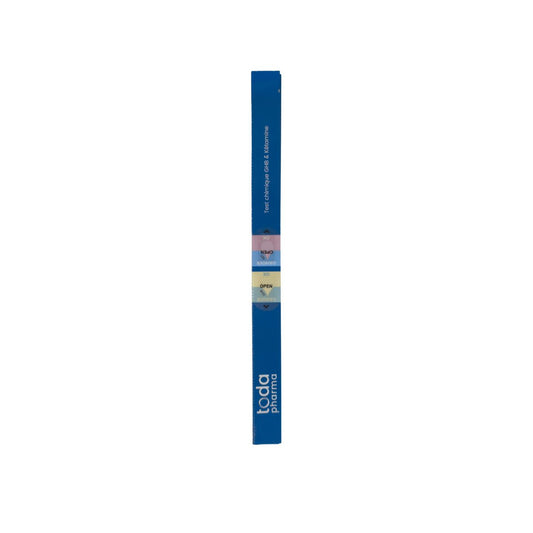
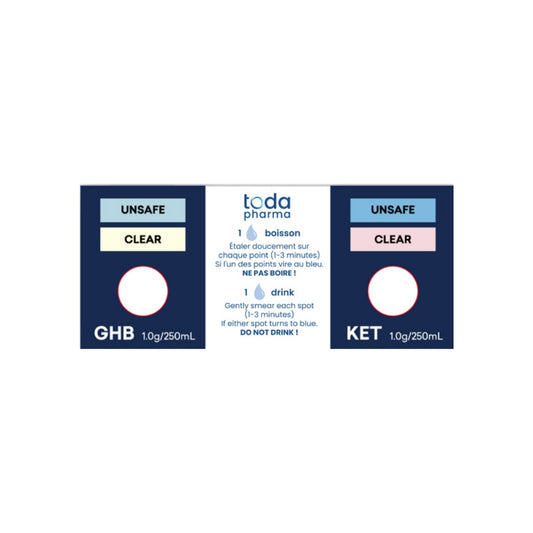
Rapid tests can detect certain substances or help guide what to do next. Their scope remains limited: they do not cover all molecules, may miss an unusual mixture, and do not have the evidentiary value of a forensic examination. When a sample is taken late, a negative result does not necessarily rule out exposure.
The trap of missing memories
In repeated domestic violence, memories may be fragmented or absent. The NCA encourages investigators to examine the perpetrator's behavior, the repetition of the incidents, and digital traces rather than waiting for a perfectly linear account. A victim can ask for help without having complete evidence or an intact memory.3
10. The French response since January 1, 2026
A three-year pilot program now allows specialized tests to be covered by Health Insurance in several regions, even without a prior complaint. The aim is to reduce diagnostic uncertainty and no longer make access to sample collection conditional on an immediate court decision.
The program began in Île-de-France, Hauts-de-France, and Pays de la Loire, with an announced extension to Guadeloupe. Anyone with an appropriate prescription issued by a physician in one of these territories can have samples taken at a medical biology laboratory. The samples are then sent to a laboratory specializing in toxicology. The results are given to the prescribing physician, who explains them during a consultation. Where appropriate, they may subsequently be submitted as part of legal proceedings.14
CRAFS — the Reference Center for Substance-Facilitated Assaults — provides guidance to victims, support for professionals, and anonymized data collection for the pilot program. Remaining samples are stored for three years by the specialized laboratory, which may become important when a victim decides to file a complaint after the samples were taken.
The French criminal justice framework
Article 222-30-1 of the French Criminal Code penalizes administering, without a person's knowledge, a substance capable of impairing their judgment or control of their actions in order to commit rape or sexual assault. The penalty is five years' imprisonment and a €75,000 fine. It increases to seven years and €100,000 when the facts involve a child under fifteen or a particularly vulnerable person.15
These penalties concern the administration of the substance itself. They may be added to the charges and penalties relating to rape, sexual assault, violence, invasion of privacy, the recording or distribution of images, attempted homicide, and drug-related offenses.
What Médusa changes for prevention stakeholders
The key lesson is that prevention can no longer be designed solely around drinks at parties. Organizers, venues, local authorities, healthcare professionals, businesses, and associations must consider several scenarios: exposure through a drink, administration in food, misuse of medication, chemical vulnerability, repeated domestic violence, and the digital circulation of evidence.
Train the teams
Recognize the symptoms, avoid blaming the person, keep them safe, document the timeline, and activate medical care.
Write a protocol
Define who alerts emergency services, who provides support, who preserves physical evidence, and how to protect confidentiality.
Know the tools' limitations
No accessory or single test covers every substance or scenario. These tools only make sense as part of a collective protocol and must never place the burden of protection on the victim.
11. Medusa's blind spots
The Europol statement raises as many questions as it answers. Several crucial pieces of data are still absent from the public debate.
The ten decisive questions
- What is the complete list of substances seized or detected in the Medusa proceedings?
- How many victims, suspects, and cases directly concern France?
- How are the 57 arrests distributed among the countries?
- How many victims were still unaware of the events when they were identified?
- What proportion of assaults is committed by a spouse, relative, or person in a position of authority?
- Are there organized suppliers manufacturing mixtures specifically intended for assaults?
- What role do public platforms play compared with encrypted messaging services?
- How much known content remains accessible, copied, or monetized?
- How much time passes between the first digital report and police intervention?
- Will Switzerland and other states formally join the project?
The July 2 assessment is only a snapshot. The next developments will come from national proceedings, court decisions, toxicological analyses, new identifications, and perhaps the arrival of other countries in the cooperation effort.
12. What Medusa changes in our understanding of risk
Medusa forces us to look beyond bars and festivals. Chemical submission can become a technique of coercive control within a relationship, family, or other personal context, repeated for months or years in the very place where the victim should be safe.
Digital spaces are not merely where evidence eventually appears. They can be where assaults are conceived, planned, discussed, and celebrated. The response must therefore bring together toxicology, healthcare, police, justice, digital identification, international cooperation, psychological support, and prevention.
Substances also require us to move away from shortcuts. GHB and ketamine are among the risks, but cases also involve sedatives, antihistamines, opioids, synthetic benzodiazepines, stimulants, and atypical cocktails. The issue is not to look for a supposed single drug, but to understand which substance was used, in what mixture, at what time, and in what context of domination.
Build prevention that does not rely on a single tool
AMA Prévention supports establishments, organizers, local authorities, and companies in designing coherent programs: awareness-raising, alert protocols, harm-reduction tools, team training, and referral to medical and judicial professionals. Prevention must protect without assigning blame and remain transparent about the limitations of each solution.
Frequently asked questions about Operation Médusa
What is Operation Médusa?
Project MEDUSA is a cooperation led by Germany and the United Kingdom, supported by Europol and launched in April 2026. It targets substance-facilitated sexual assaults, particularly within intimate relationships and digital communities that organize, encourage, or disseminate this violence.
How many victims were discovered?
Europol reports that 158 victims were brought to safety in cases linked to the project. The figure of 156 published for the June operation refers to a group of identified victims and suspected perpetrators, not 156 additional victims.
What substances are involved in Médusa?
Europol does not publish an exhaustive list. Authorities mention prescription drugs, narcotics, sedatives, and alcohol. In a product purchased by journalists within the precursor network, an analysis identified medetomidine, flualprazolam, and scopolamine. This composition cannot be generalized to all cases.
Is the case involving the former Swiss elected official part of Médusa?
No official link has been established. Fedpol stated that it was not aware of any specific Swiss case connected to Médusa and had not participated in the operation. The Aargau case presents similarities in modus operandi, but this does not demonstrate a connection with the networks targeted by Europol.
What should you do if you suspect drug-facilitated assault?
Get to safety, seek medical attention without delay, explicitly report the suspicion, preserve physical evidence, and note the timeline. In France, call 15 or 112 in the event of a medical emergency, 17 or 114 if you are in danger, CRAFS on 01 40 05 42 70, and France Victimes on 116 006. 3919 is a helpline and referral service, not an emergency number.
Sources and documents consulted
- Europol — 156 individuals identified in first-of-its-kind drug-facilitated sexual assaults operation, July 2, 2026.
- Europol — Project MEDUSA, project launched on April 1, 2026, updated on July 14, 2026.
- National Crime Agency — Coordinated response to organised drug-facilitated sexual assault, July 2, 2026.
- NDR — Investigation triggers international “Medusa” operation, July 2, 2026.
- NDR / Panorama — Women drugged and filmed: The rape network, July 10, 2025.
- NDR — Investigation failure remains unresolved, investigation into the handling of alerts.
- NDR — Charges filed in Berlin arising from the network's offshoots, July 16, 2026.
- funk / STRG_F — Analysis of the product sold as a hair-care treatment, December 2024.
- CDC — Medetomidine Situation Summary, April 2, 2026; see also the DEA fact sheet.
- WHO, ECDD Information Repository — Flualprazolam.
- Public medicines database — Scopolamine, summary of product characteristics.
- Assurance Maladie — Drug-facilitated assault and chemical vulnerability, February 12, 2025.
- ANSM / Paris Addictovigilance Centre — National Survey on Drug-Facilitated Submission 2023, published in 2025.
- Ministry of Health — Pilot program to combat drug-facilitated submission, implemented on January 1, 2026.
- Légifrance — Article 222-30-1 of the Criminal Code, version in force.
- Public Prosecutor’s Office of the Canton of Aargau — Indictment filed in extensive sexual criminal proceedings, July 20, 2026.
- SRF — Aargau former politician could face life imprisonment, July 20, 2026.
- SRF — Switzerland, Fedpol and the Medusa project, July 3, 2026.
- ACT by Campax — Projekt Medusa Schweiz, petition launched on July 21, 2026.
- Hamburg Police — Sexual violence against people deliberately sedated within their close circle.
- Service-Public.fr — Emergency numbers; see also the government portal Arrêtons les violences.
Sources and verification: this file is based primarily on judicial and police authorities, legal texts, health agencies, and public-service media outlets that originally reported the revelations. The figures for the June operation have been separated from the cumulative total. Individual allegations are attributed to their source and presented within the framework of the presumption of innocence.
In the event of danger, loss of consciousness, or worrying symptoms, contact the emergency services immediately. The information in this file is not a substitute for medical care or legal proceedings.