Anti-drug nail polish: why it is not a reliable protection
Investigation · prevention · critical analysis
Drug-detection nail polish went viral before it had even proved that it could protect anyone.
For years, publications promised that simply bringing a polished fingernail into contact with a drink would be enough to reveal a suspicious substance. The concept was spectacular. The product itself never reached the general public in the announced form. A look back at a media-friendly innovation, its technical limitations and the solutions actually available today.
The Undercover Colors project was presented as a future detection nail polish. It was ultimately abandoned in this form.
A device detects certain substances under certain conditions. A negative result never rules out all risks.
Glass protection, targeted detection, trained teams, a safe zone and a rapid medical response must work together.
Drug-detection nail polish: the story of an announcement that became more famous than the product
In 2014, four students from North Carolina State University presented Undercover Colors. Their ambition: to create a transparent nail polish capable of changing color when it comes into contact with a drink containing certain substances. The idea was immediately picked up around the world.
The media success rests on a simple image: someone discreetly dips a finger into their drink and gets a visible indication within a few seconds. The device seems intimate, easy to carry and suitable for a night out. On social media, the conditional quickly disappears. A research project under development becomes, in publications, a supposedly available product.
The industrial reality is less spectacular. University communications still describe a prototype. A few years later, the company ultimately abandoned the nail polish format in favor of another testing medium. According to explanations reported by AFP, consumer trials had revealed too many limitations to launch the product with confidence.12
The drug-detection nail polish is therefore not an effective form of protection that mysteriously disappeared from the market. It is a development concept that became a collective certainty before completing the validation, real-world use and commercialization stages.
Why the appealing concept did not withstand real-world use
A detection tool cannot be judged by its appearance or by how easily its principle can be explained. It must specify what it detects, at what threshold, in which drinks, with what reading time, and with which interferences.
A necessarily limited detection spectrum
A reagent does not indiscriminately recognize all substances that may be used. Detecting a few molecules can never establish the absence of sedative medications, other drugs, or new synthetic products.
Drinks that can interfere with interpretation
Red wine, colorful cocktails, highly acidic drinks, syrups, juices, or opaque mixtures make visual interpretation more difficult. Without drink-by-drink validation, a change in color may become difficult to interpret.
An unnatural gesture in a stressful situation
Dipping a fingernail into a drink raises questions of hygiene, discretion, and handling. In a dark, noisy, or anxiety-inducing environment, theoretical simplicity does not guarantee correct use.
The major risk: believing that a negative result guarantees safety
An untargeted substance, a concentration that is too low, an incompatible drink, or an error in use may produce no signal. The danger begins when “no targeted substance detected” becomes, in the user's mind, “this drink is safe.”
Chemical submission is not limited to GHB, drinks, or parties
French authorities distinguish chemical submission - administering a substance without the person's knowledge, under threat, or by force - from chemical vulnerability, when the perpetrator takes advantage of a state linked to voluntary consumption. In both cases, responsibility remains with the aggressor.
The substances identified in case files may include benzodiazepines, hypnotics, sedating antihistamines, opioids, antidepressants, GHB, ketamine, MDMA, cocaine, synthetic cathinones, or alcohol. Drinks are a common vehicle, but administration can also occur in food, under the guise of medication, or in a private or intimate-partner setting.34
This diversity makes a universal test impossible to promise. Serious prevention works through complementary layers: limiting access to the glass, screening for certain substances when relevant, recognizing symptoms, protecting the person, and quickly initiating care.
The solutions offered by AMA Prévention: four different roles, not four identical promises
AMA Prévention does not market drug-testing nail polish. The available solutions serve distinct purposes: targeted detection in a drink, physical protection for the glass, or electronic assistance with analysis for professionals.


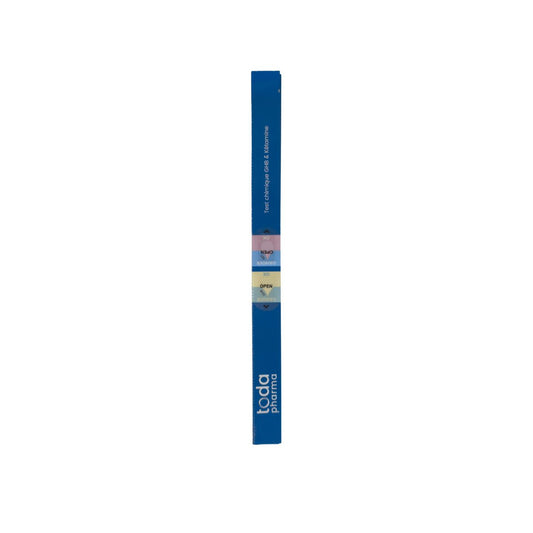
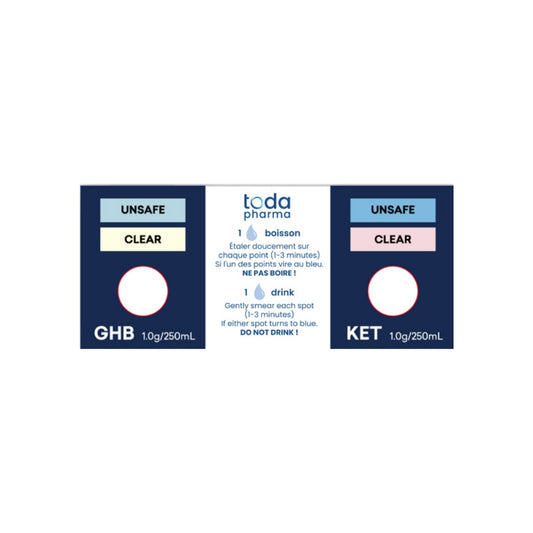
Test Ton Verre® bracelets
A wrist-worn accessory suited to events and visible prevention campaigns.
View the bracelets
AMA Prévention glass cover
A flexible cover that protects the glass and acts before any suspicion arises.
View the protection
B-SAFE, connected electronic detector
A professional device developed by LUEUR and officially distributed by AMA Prévention.
Discover B-SAFEChoose a tool based on the situation, not the most spectacular promise
A glass cover acts upstream. A card or bracelet can complement vigilance for targeted testing when doubt arises.
Distributing tools must be accompanied by a safe zone, identifiable contacts, trained teams, and an alert protocol.
B-SAFE can complement an on-site protocol for analyzing a suspicious drink or sample, with connected, documented results.
The priority is no longer to multiply self-tests: keep the person safe, call emergency services, and facilitate prompt sample collection.
When someone shows unusual symptoms, stop testing and start protecting them
Sudden drowsiness, confusion, loss of balance, nausea, unusual behavior, or memory loss must be taken seriously, especially when the effects seem disproportionate to the reported consumption.
Priority actions
- Move the person to a safe place and never leave them alone.
- Call 15 or 112 in the event of discomfort, severe drowsiness, confusion, or loss of consciousness.
- Call 17 in the event of danger, assault, or the presence of a suspected perpetrator.
- Keep the drink, container, or any useful item when doing so does not delay care.
- Record the time, symptoms, known consumption, and people present.
- Encourage prompt medical consultation and sample collection: some substances leave the body quickly.4
Building coherent prevention without placing responsibility on victims
These tools are useful when integrated into a comprehensive approach: beverage protection, targeted detection, training, safe zones, care protocols, and referral to emergency services. AMA Prévention supports individuals, establishments, festivals, local authorities, and businesses with a transparent presentation of each solution's capabilities and limitations.
Frequently asked questions
Is there currently a reliable nail polish against drugs in drinks?
The viral Undercover Colors project did not become the consumer nail polish that had been announced. The format was abandoned after trials and usage limitations were deemed insufficient for safe commercialization.
Does a negative result mean that the drink is safe?
No. It only means that no targeted substance was detected under the test conditions. Another molecule, a concentration that is too low, or interference may produce no signal.
Do Test Ton Verre® cards and bracelets detect all substances?
No. They are designed for targeted detection of GHB and ketamine in beverages. Their simplicity must never be confused with universal coverage.
Can a glass cover replace a test?
No, because its function is different. It acts as a physical barrier upstream, while a test looks for certain substances after suspicion arises. The two approaches can complement each other.
Does B-SAFE replace a toxicological analysis?
No. B-SAFE provides a connected electronic indication designed to help professionals respond in the field. Medical or legal confirmation requires appropriate samples and analyses.
Sources and editorial transparency
- North Carolina State University — More than a nail polish.
- AFP Factuel — The anti-drug nail polish was not marketed as viral posts claimed.
- Assurance Maladie — Chemical submission and chemical vulnerability.
- Assurance Maladie — Victim of chemical submission: act without delay.
Transparency: AMA Prévention sells the Test Ton Verre® cards and bracelets, the glass cover, and B-SAFE featured in this article. Each solution is described along with its uses and limitations. No product should be presented as an absolute guarantee or as a substitute for emergency services, medical care, or toxicological analyses.