Back to school: organizing safer welcome parties
The safety of an integration party is prepared before the doors open
A successful party combines welcome, consent, alcohol management, drug prevention, protection against chemical submission, and safe return. The goal is not to eliminate the party but to prevent a predictable situation from becoming an emergency.
Start with a risk assessment
The system must consider the venue, capacity, possible presence of minors, alcohol service, available transportation, and emergency resources. An identified person must coordinate providers, volunteers, and contacts.
The four pillars of a safer party
Alcohol management
Provide accessible water, visible non-alcoholic drinks, responsible service, and a clear refusal to serve a visibly vulnerable person.
Consent and behavior
Display rules, train teams on sexist and sexual violence, and set up a simple reporting channel.
Contacts and safe zone
Those responsible for assistance must be identifiable. A quiet space allows protecting and supporting a person in difficulty.
Safe return
Provide information on transportation, shuttles, taxis, or sober drivers. Breathalyzers complement the system without replacing the decision not to drive.
Preventing chemical submission without creating a false sense of security
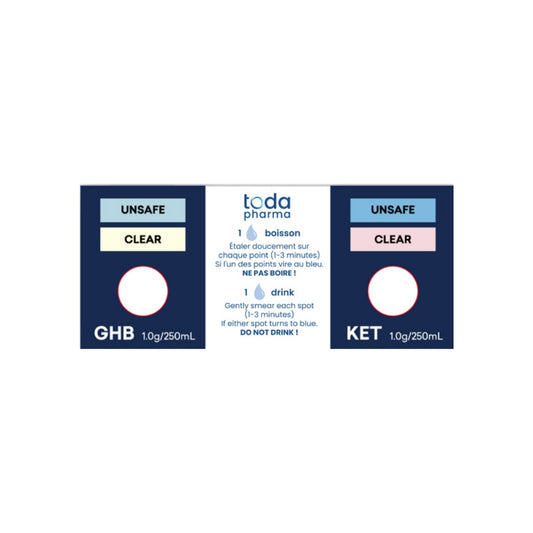
Prevention must combine collective vigilance, drink protection, targeted detection tools, and an emergency protocol. Test Ton Verre® bracelets or cards detect GHB and ketamine under the conditions specified in their instructions. Glass condoms provide a physical barrier. None of these tools detect all substances.
Train teams in simple reflexes
- Spot disorientation, unusual drowsiness, memory loss, or difficulty standing.
- Do not trivialize an unusual state just because the person has consumed alcohol.
- Prevent a vulnerable person from leaving with a stranger or staying isolated.
- Note useful details: time, place, witnesses, drink, and symptom progression.
- Preserve possible evidence without delaying care.
What tools to provide?
Customizable bracelets
Test Ton Verre® bracelets can be customized from 500 units to integrate the event’s prevention campaign.
Compact cards
Test Ton Verre® cards are not customizable, but their size allows them to be kept in a wallet or phone case.
Glass condoms
They reduce the chances of discreetly introducing a substance, without analyzing the drink.
Breathalyzers
They support road safety at departure time, in a system that must also provide alternatives to driving.
Build a system adapted to your event
AMA Prévention supports BDEs, schools, associations, communities, and organizers with prevention solutions and professional volumes.
Frequently asked questions
Is one bracelet enough to secure an event?
No. It must be part of a strategy including training, contacts, emergency services, alcohol control, and collective vigilance.
What to do when someone seems abnormally intoxicated?
Do not conclude too quickly that it is just simple intoxication. Ensure their safety, monitor their condition, and call emergency services if symptoms are concerning.
Do the cards and bracelets detect all drugs?
No. They are limited to the substances and conditions indicated in their instructions.
Useful sources
Service-Public.fr — refreshment stand or bar run by an association
Stop the violence — chemical submission
The exact obligations depend on the location and the event. They must be verified with the manager, the town hall, the prefecture, and the insurer.