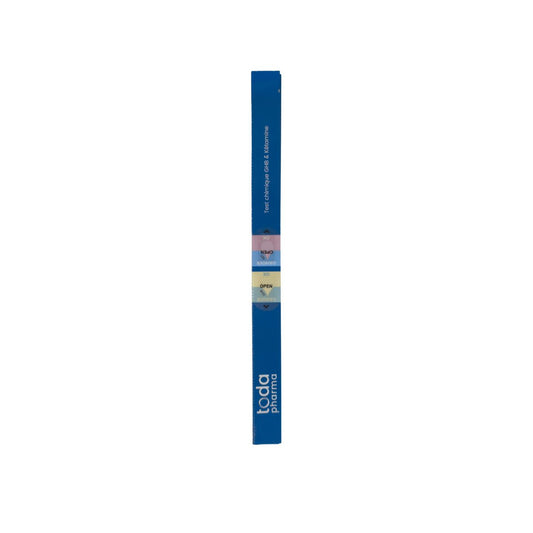
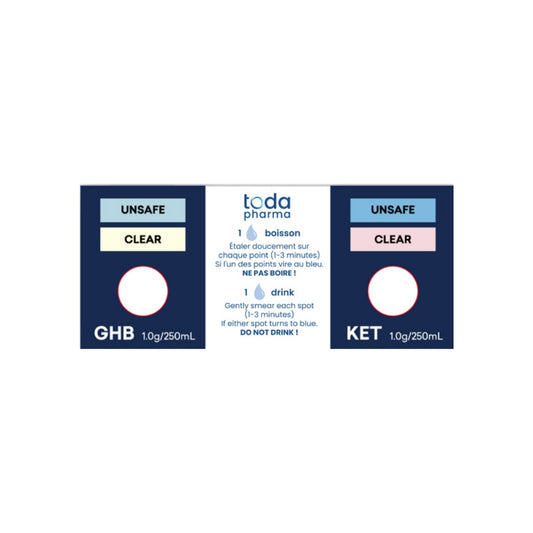
Glass condom and anti-GHB/Ketamine bracelets: solutions against chemical submission
Parties, festivals, or festive events should always be about fun and safety. Yet, chemical submission — the administration of substances like GHB or ketamine without the victim’s knowledge — is affecting more and more people in France. These drugs, colorless and odorless, can be discreetly slipped into a glass within seconds.
At AMA Prévention, we work every day to strengthen prevention against chemical submission in festive environments. Our solutions — Test Ton Verre® GHB/Ketamine detection bracelets and customizable glass caps — provide concrete, accessible protection suitable for all contexts.
Chemical submission: understanding the risk to better protect yourself
The substances involved — GHB, ketamine, and sometimes certain benzodiazepines — can cause disinhibition, rapid sedation, memory gaps, and loss of control. They are often administered without the victim’s knowledge during a party, concert, or festival. Hence the need for simple tools to test a drink and protect your glass.
Our AMA Prévention solutions: taking concrete action against chemical submission
To address this issue, AMA Prévention offers proven prevention devices, already used by festivals, bars, associations, and communities:
- Test Ton Verre® bracelets against GHB & Ketamine: change color within seconds upon contact with a drink containing one of these substances. Simple, fast, and discreet.
- Anti-drug glass protection caps: reusable and hygienic physical protection to prevent substances from being introduced into the glass. Customizable (logo, colors, packaging) for bars, festivals, and institutions.
Note: these devices are prevention tools and drink testing tools. They do not replace biological screening or medical or legal care.
How to use these devices effectively?
- As soon as you receive your drink, immediately cover your glass with an AMA Prévention protective cap.
- If in doubt, place a few drops of your drink on the Test Ton Verre® anti GHB/Ketamine bracelet and observe the result.
- Never leave your glass unattended and stay alert to unusual behavior around you.
A major public health challenge
Cases of chemical submission are recognized as a major public health and safety issue in festive environments. The phenomenon affects all generations, with particular exposure among young adults and students. National analyses report an increase in reports since 2022 (ref. OFDT).
Beyond individual behaviors, the response must be collective: venues, organizers, and institutions play a key role in making festive spaces safer. AMA Prévention collaborates with committed partners, including the association M’Endors Pas, recognized for its work supporting victims and raising awareness.
Useful numbers and resources for victims of chemical submission
- 17 — Police Secours (immediate emergency call)
- 15 — SAMU (medical emergencies)
- 3919 — Violences Femmes Info (listening & orientation 24/7)
- Association M’Endors Pas — support and information: mendorspas.org
- CRAFS — Resource center (information and guidance): lecrafs.com
These resources help guide, protect, and support victims or witnesses of chemical assaults. In an emergency, call 17 or 15 immediately.
Conclusion: prevention is protection
The fight against chemical submission relies on vigilance, information, and the use of reliable tools. Thanks to its Test Ton Verre® bracelets and customizable anti-drug protections, AMA Prévention is committed to securing festive environments and raising public awareness.
Together, let’s work for safer nights out. Discover all our solutions at ama-prevention.fr.
⚠️ Prevention and Safety: Beware of fake anti-GHB tests
The market is flooded with simple paper "anti-GHB" gadgets made in Asia, without scientific validation or proven effectiveness. The Test Ton Verre® bracelets from AMA Prévention are genuine devices developed in laboratories, made from durable materials and designed by a French Manufacturer. Don’t entrust your safety to a counterfeit: demand certified and reliable protection against chemical submission.
Which substances can be detected in a drink?
Chemical submission is not limited to GHB. Reported cases may involve sedatives, anxiolytics, antihistamines, opioids, or drug mixtures. This is precisely why a modern prevention approach must address drugs in drinks, not just anti-GHB.
Type 1 benzodiazepines
The “-pam” family: diazepam/Valium, oxazepam/Séresta, lormetazepam, bromazepam/Lexomil, clonazepam/Rivotril, lorazepam, flunitrazepam, nordazepam, loprazolam/Havlane, chlorazepate/Tranxène, prazepam/Lysanxia, nitrazepam, temazepam, chlordiazepoxide. Noted exception: clobazam.
Type 2 benzodiazepines
The “-lam” family: alprazolam/Xanax, midazolam, triazolam, estazolam and related molecules.
Synthetic benzodiazepines
Bromazolam, etizolam, bentazepam, bromonordiazepam/desalkylgidazepam, flubrotizolam, fluclotizolam, gidazepam, methylclonazepam, norflurazepam/desalkylflurazepam, thionordazepam/demethylsulazepam, tofisopam/Emandaxin.
Other relevant families
Antihistamines and phenothiazines: pheniramine/Fervex, cyamemazine, alimemazine/Théralène, levomepromazine/Nozinan, chlorpromazine/Largactil, promethazine. Opioids: codeine, morphine, oxycodone and related opioids, with caution regarding pure tramadol. Other substances: GHB, ecstasy/MDMA, and certain cutting drugs.
Important note: this information should be read as an aid to prevention and choosing risk reduction tools. A drink test does not replace collective vigilance, medical care, or sampling performed in a medico-legal context. Antipsychotics such as olanzapine, clozapine, or quetiapine are mentioned as a family to be confirmed.
Prevention FAQ: drink tests, GHB, and chemical submission
Is an anti-GHB product enough to cover the risk?
No. GHB is highly publicized, but chemical submission can also involve benzodiazepines, sedative antihistamines, opioids, ecstasy/MDMA, or mixtures. A prevention strategy must therefore address drug detection in drinks more broadly.
Why combine B-SAFE with Test Ton Verre bracelets or cards?
Uses differ: cards and bracelets are simple, accessible, and suited for event distribution; B-SAFE offers a broader, premium approach for individuals, venues, or organizers who want to strengthen control over a suspicious drink.
What to do in case of discomfort or doubt?
Ensure the person’s safety, do not leave them alone, alert those around or staff, contact emergency services if necessary, and keep the glass if analysis might be useful. The test is a prevention tool, not a medical diagnosis.
Scientific validation of B-SAFE
The B-SAFE project, a drug detector pen for drinks, is validated and supported by Professor Jean-Claude Alvarez, toxicologist, professor of pharmacology-toxicology, and director of the toxicology laboratory at CHU Raymond-Poincaré/AP-HP in Garches.
A leading authority in toxicology, he is associated with the reference work conducted in France on psychoactive substances and chemical submission, in a national ecosystem also supported in public debate by voices such as Sandrine Josso and Caroline Darian.
This validation strengthens B-SAFE's technological positioning and the accuracy of its detection for drug prevention in drinks. Discover the B-SAFE product sheet.